23 Blenheim Road
The Girl on the Train23 Blenheim Road is the Victorian semi that Rachel Watson once shared with Tom Watson and part-owned, and later the home of Tom, Anna Watson, and their daughter, Evie. Its significance lies in the way an ordinary domestic address becomes inseparable from Rachel’s loss: she watches it from the train, remembers its altered rooms, and returns to it in moments when memory and action become difficult to separate.
The former home
Rachel lived at 23 Blenheim Road for five years. She remembers that period as both intensely happy and deeply unhappy, but the house still has the distinction of being her first home: unlike her parents’ house or a student flatshare, it was a place she had made with Tom. She and Tom part-owned it, giving her attachment a material as well as emotional basis. After leaving, Rachel lives as a lodger in Cathy’s Ashbury flat rather than as a homeowner or tenant. The contrast sharpens what the old address means to her: the small bedroom in Cathy’s home is a temporary space, while the Victorian semi remains, in her own sense of belonging, home.
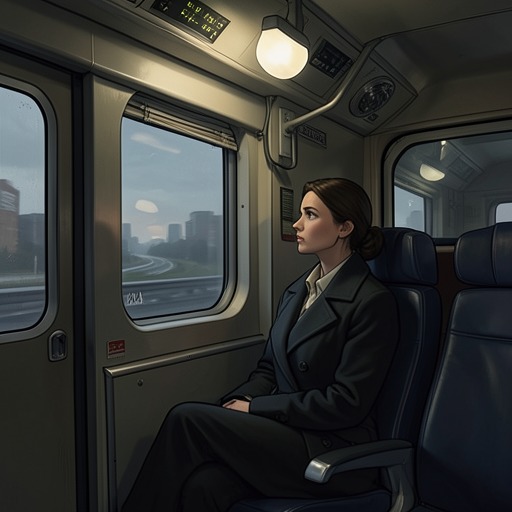
That attachment persists through the view from the train. Rachel tells herself each day not to look at 23 Blenheim Road, then looks anyway, even though she expects whatever she sees to hurt. The house is close enough to be legible in passing, yet out of reach; the moving train makes looking a repeated, involuntary encounter rather than a visit. Details of change become particularly charged. Rachel recalls seeing the upstairs bedroom’s cream linen blind replaced by a soft pink one, then seeing Anna watering the rose bushes while visibly pregnant. The altered blind and the garden scene make the succession of occupants concrete: the domestic life Rachel had shared with Tom has continued with Anna, and the house now bears signs of that new family.
A house passed on
Rachel’s memory of the transition is tied to the speed with which Anna moved in. About two days after Rachel left, she returned to collect something she had forgotten, although she later could not remember what it was. She saw Anna carrying belongings from a car into the house. Rachel was crying and moved toward her, unsure what she intended to say; Anna saw her and ran away. At that point Rachel did not yet know the full extent of what had happened between Anna and Tom, or that Anna was pregnant. The house therefore marks not only a separation but the delayed recognition of its circumstances: the new occupant was already moving into the life Rachel had just left, while Rachel was still trying to understand the loss.
Later, the address remains a place Rachel approaches without being able to settle what she wants from it. During an evening walk, anxious and unable to keep still, she stops outside and considers ringing the bell, but cannot decide what she would say. The blinds are half open, yet she cannot see anyone inside. The pause captures the house’s double status: it is familiar enough for Rachel to contemplate entering, but it belongs to another household, and she has no clear claim or purpose that would make a visit straightforward.
Entry and the taking of Evie
Rachel’s later account to the police initially presents her visit as an attempt to speak with Tom. She says she went over the fence into the back garden, where the sliding doors led toward the house, and insists that she did not break in. She explains that she knew the old arrangement for a spare key at the back, kept in case one of them lost or forgot their keys. In the questioning, the details of access become central: the familiar route from the garden to the sliding doors complicates her distinction between entering a former home and trespassing in her ex-husband’s current one.
Rachel eventually acknowledges that the visit did not happen as she had described it. She had not rung the doorbell, and she had not called out to Tom or Anna. She looked through the partly open sliding doors and saw Anna asleep on the sofa, with Evie asleep in her carrycot beside her. Rachel picked up the baby and carried her outside, running toward the fence as Evie woke and began to cry. Anna came after them and took the child back. Tom returned and calmed Anna, who wanted to call the police and have Rachel arrested for kidnapping. He persuaded her to let the matter go, then drove Rachel home. The house is thus the setting for a decisive breach: Rachel’s familiarity with its entrances and garden does not give her authority over the family now living there, and her unresolved attachment becomes an act that alarms them and exposes Evie to danger.
Returns and altered details
The address continues to organize Rachel’s thoughts after the incident. When she later stands across from the house, she notices that the front door, which had been dark green while she lived there, is now black. She wonders what else has changed inside: the baby’s room, the bed she once shared with Tom, the mirror she hung, and a hole in the upstairs corridor wall. These questions do not establish what the house now contains; they show how Rachel’s remembered interior competes with its present life. She wants to knock and ask Tom about the night Megan Hipwell disappeared, but remains outside, looking up at her old bedroom window until she has to leave.
After a frightening encounter with Scott Hipwell, Rachel goes to 23 Blenheim Road in a panic and bangs on the door. No one answers, so she writes a brief, vague note to Tom and pushes it through the letter box. She does not name Scott, concerned that Tom might confront him. The note turns the house into a channel for communication as well as a destination, but Rachel still controls what she tells its occupants and what she withholds. Her return is shaped by caution and urgency rather than by any expectation that the address can restore her former place in the household.
The house as a threshold
On Sunday, 18 August 2013, Rachel comes back and rings the bell, then walks along the side passage when nobody answers. The scene recalls her earlier entry to take Evie, but this time she hears Evie chatting and finds Anna with the child on the patio. Rachel calls out and climbs over the fence. Anna is calm, though pale and with red eyes; she stands up, takes Evie by the hand, and draws her close. Rachel has crossed into the garden again, but the encounter is not a repetition of the earlier one: Anna knows who she is, keeps Evie beside her, and asks what Rachel wants.
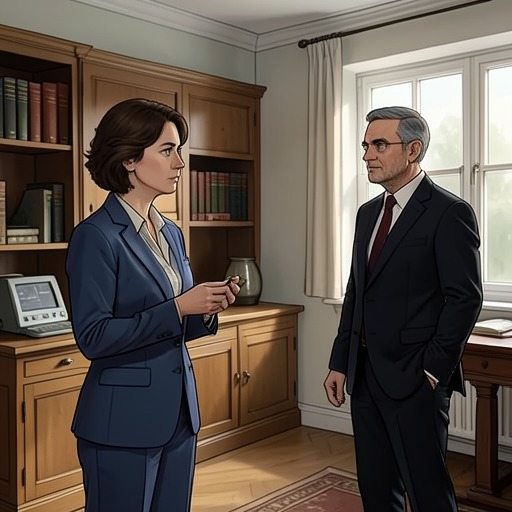
When Tom later arrives, Anna runs into the house and embraces him, with Evie between them. Rachel follows only as far as the sliding doors and watches the family together. Tom addresses the two women lightly, but Rachel recognizes that his tone does not reassure her. The house’s boundary now makes the changed relationships visible: Anna and Tom occupy the interior as a family, while Rachel stands just outside, close enough to witness them but no longer part of their home. Across the novel’s returns, 23 Blenheim Road is both a physical setting and a measure of Rachel’s changing understanding—from the place she calls home, through a site of concealed betrayal and transgression, to a threshold at which the present household can no longer be mistaken for her own.